The world of jewelry craftsmanship has long been dominated by traditional techniques, but in recent years, a silent revolution has been unfolding in the realm of invisible settings. This sophisticated method, which allows gemstones to appear as if they are floating without visible metal supports, has captivated designers and collectors alike. Among the various approaches to invisible settings, two primary methods have emerged as the frontrunners: the rail setting and the hole setting. Both techniques offer distinct advantages and present unique challenges, but the question of which provides superior durability and security for precious stones remains a topic of intense debate among master jewelers and industry experts.
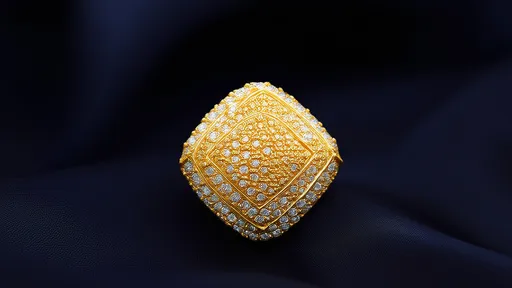
Invisible settings, also known as mystery settings, represent the pinnacle of jewelry engineering. The technique involves setting stones so that no metal is visible from the top, creating a seamless surface of glittering gems. This illusion requires extraordinary precision in both stone cutting and metalwork. The stones must be cut with exacting mathematical precision, often featuring grooves or channels that allow them to interlock with hidden metal structures. The metal framework itself must be engineered to provide maximum security while remaining completely concealed. This marriage of art and science has made invisible settings among the most valued and technically demanding techniques in high jewelry.
The rail setting method, sometimes referred to as the channel setting in its invisible variation, involves creating thin metal tracks or rails into which the precisely cut gems slide and lock into place. Each stone is cut with grooves along its sides that correspond to the metal rails. When assembled, the stones appear to connect directly to each other, with the metal framework hidden beneath the surface. This method requires exceptional precision in both stone cutting and metal fabrication, as even the slightest deviation can prevent proper alignment or compromise the structural integrity of the piece.
One of the significant advantages of the rail setting is its ability to create larger continuous surfaces of gems without visible interruptions. The hidden rails provide a continuous support structure that distributes pressure evenly across multiple stones. This distribution of force can make the setting particularly resistant to impacts from certain angles. However, the complexity of manufacturing means that rail settings typically require more metal work beneath the stones, which can sometimes make pieces heavier and potentially more susceptible to damage if struck from below where the metal framework is exposed.
The hole setting technique takes a different approach, drilling microscopic holes into the stones themselves and using nearly invisible wires or pins to secure them to the mounting. This method represents an even more radical departure from traditional jewelry techniques, as it involves modifying the stones in ways that many traditional jewelers would consider sacrilegious. The holes are typically drilled with laser precision at angles that make them invisible when viewed from above, while tiny metal pins or wires pass through these channels to anchor the stones to the base structure.
Proponents of hole settings argue that this method provides superior security for individual stones, as each gem is independently anchored to the mounting. Unlike rail settings where multiple stones share support structures, hole settings isolate each stone's attachment points. This means that if one stone becomes loose or damaged, it's less likely to affect neighboring stones. The independent anchoring also allows for more flexibility in design, as stones can be set at different angles or in more complex patterns without being constrained by continuous rail structures.
When evaluating the durability of these two techniques, jewelers must consider multiple factors including resistance to impact, security against stone loss, and long-term wear resistance. Rail settings generally excel in protecting against impacts from above, as the continuous metal framework beneath the stones provides a solid backing. However, impacts from the side can potentially dislodge multiple stones simultaneously if the rail structure becomes compromised. The interlocking nature of the stones in rail settings means that damage to one part of the structure can affect the entire section.
Hole settings demonstrate remarkable resistance to side impacts, as each stone is independently secured. The microscopic pins or wires act as individual shock absorbers, allowing stones to move slightly without becoming dislodged. This flexibility can be particularly advantageous in pieces that experience regular movement, such as bracelets or rings. However, the modification of the stones themselves raises concerns about their structural integrity. While modern laser drilling techniques minimize damage, any modification to a gemstone technically makes it more vulnerable to cracking or chipping under certain types of pressure.
The long-term maintenance requirements differ significantly between these two methods. Rail settings typically require professional attention for even minor repairs, as accessing individual stones often involves disassembling entire sections. The precision required for realignment means that repairs should only be attempted by specialists trained in this specific technique. Hole settings, while equally delicate, may allow for slightly easier replacement of individual stones without disturbing the entire arrangement. However, the process of drilling new stones to match existing holes requires extraordinary precision and specialized equipment.
Environmental factors also play a crucial role in the longevity of these settings. Moisture, temperature changes, and chemical exposure can affect the metal components differently in each technique. In rail settings, moisture trapped beneath the continuous metal framework could potentially lead to corrosion over decades of wear. Hole settings expose minute amounts of metal through the drilled channels, creating different potential vulnerabilities. The choice of metal becomes particularly important—platinum and palladium offer superior resistance to corrosion, while gold alloys must be carefully formulated to maintain their integrity over time.
From an artistic perspective, both techniques enable breathtaking designs that would be impossible with traditional visible settings. Rail settings excel in creating smooth, continuous surfaces ideal for geometric patterns and art deco-inspired designs. The hidden structure allows for dramatic sweeps of color and texture without visual interruption. Hole settings offer greater flexibility for organic, flowing designs where stones might need to follow irregular contours or be set at varying angles. This makes them particularly popular for nature-inspired pieces featuring floral or aquatic motifs.
The question of which technique proves more secure and durable ultimately depends on the specific application and wearing conditions. For pieces that will experience regular impact or pressure, such as eternity rings or bracelet clasps, the distributed support of rail settings might provide better overall protection. For earrings or pendants where individual stones might experience twisting forces, the independent security of hole settings could offer superior performance. Many contemporary jewelers are now combining both techniques within single pieces, using each method where its strengths are most advantageous.
As technology advances, both techniques continue to evolve. Computer-aided design and manufacturing have brought new levels of precision to rail setting production, allowing for more complex interlocking systems than were previously possible. Laser technology has revolutionized hole settings, enabling drills of incredible precision that minimize stone damage. Some innovators are experimenting with hybrid approaches that incorporate elements of both techniques, while others are developing completely new mounting systems that might someday make both methods obsolete.
The silent revolution in invisible settings continues to push the boundaries of what's possible in jewelry design. While the debate between rail and hole settings may never be fully settled, this competition drives innovation and excellence in craftsmanship. Collectors and connoisseurs increasingly recognize that the value of these pieces lies not just in the quality of the gems, but in the extraordinary skill and engineering that makes the magic of invisible settings possible. As both techniques continue to refine and improve, the ultimate winner is the art of jewelry itself, which reaches new heights of beauty and technical achievement with each passing year.
By /Aug 27, 2025

By /Aug 27, 2025

By /Aug 27, 2025

By /Aug 27, 2025

By /Aug 27, 2025
By /Aug 27, 2025

By /Aug 27, 2025

By /Aug 27, 2025

By /Aug 27, 2025

By /Aug 27, 2025

By /Aug 27, 2025

By /Aug 27, 2025

By /Aug 27, 2025

By /Aug 27, 2025

By /Aug 27, 2025

By /Aug 27, 2025

By /Aug 27, 2025

By /Aug 27, 2025

By /Aug 27, 2025

By /Aug 27, 2025
