The Mechanical Principles of Convertible Jewelry: Engineering Behind Multiple Wearable Options for a Single Piece

Aug 27, 2025 By

In the world of fine jewelry, a quiet revolution is taking place that marries centuries-old craftsmanship with cutting-edge engineering. The concept of transformable jewelry—pieces that can be worn in multiple configurations—is not entirely new, but recent advancements in mechanical design have elevated this category from novelty to ne plus ultra. These are not mere trinkets with interchangeable parts; they are miniature marvels of engineering where a single piece of jewelry can morph into several distinct forms, each with its own character and wearability.

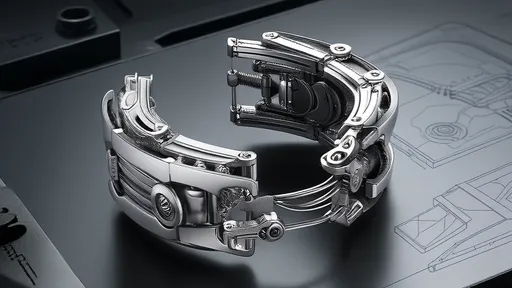
The foundational principle behind these ingenious creations is a deliberate and sophisticated application of mechanical joints, hinges, and locking mechanisms, all executed on a breathtakingly small scale. Unlike a watch movement, which is hidden from view, the mechanics of transformable jewelry are often part of the aesthetic appeal. Artisans and engineers collaborate to design systems that are both intuitive for the wearer to operate and robust enough to withstand daily use. The challenge is immense: to create moving parts that are precise, durable, and, crucially, beautiful.

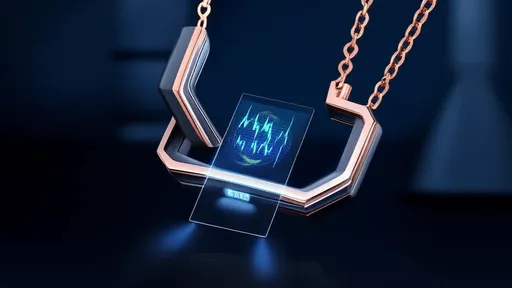
One of the most common mechanisms is the strategic use of pivots and hinges. A necklace might feature a central pendant that can be detached and, with a few deft movements, its elements reconfigured into a pair of earrings and a ring. This is achieved through tiny, almost invisible hinges that allow components to swing into new positions, locking securely into place with an audible, satisfying click. The precision required for these components is microscopic. A hinge pin might be thinner than a human hair, yet it must bear the weight of precious metals and gemstones without failing.

Another engineering triumph is the development of modular locking systems. Think of it as a sophisticated, high-end version of building blocks. Individual segments of a bracelet, for instance, can be disconnected and reassembled in a different order to change its pattern, or combined with elements from other pieces to create an entirely new item. The locks are often magnetic or employ a subtle clasp mechanism that is seamless when engaged but easily released with a specific, knowing pressure from the wearer. This requires phenomenal tolerances in manufacturing; each connector must be perfectly machined to ensure a flush fit and secure hold in every possible configuration.

The role of material science cannot be overstated. The metals used must possess a unique combination of properties: they must be malleable enough to be shaped into intricate parts, yet possess tremendous tensile strength to avoid deformation. Precious metals like platinum and high-karat gold are favored for their durability and luster, but they are also soft. Engineers often alloy them with minute amounts of stronger metals or employ innovative hardening techniques to ensure the microscopic mechanisms withstand thousands of cycles of transformation without wear.

Perhaps the most fascinating aspect is the integration of movement into the design narrative. The mechanics are not hidden away; they are celebrated. A rotating bezel on a transformable ring might be adorned with gemstones that align differently with each turn, creating new patterns of light and color. The act of transformation becomes a personal ritual, a tactile engagement between the wearer and the object. This transforms the jewelry from a static ornament into an interactive piece of art, deepening the emotional connection one has with it.

This engineering-driven approach also answers a growing desire for versatility and personalization in luxury goods. In a single purchase, a client acquires not one, but multiple pieces of jewelry. A complex necklace that becomes a tiara, a pair of earrings, and a brooch offers incredible value and adaptability. It allows the wearer to tailor their adornment to any occasion, mood, or outfit without the need for a vast collection. This practicality, born from complex mechanics, is a significant part of its allure.

However, the path from concept to finished piece is fraught with challenges. Prototyping these mechanisms is an exercise in patience and precision. Jewelers often work with 3D modeling and printing to test the kinematics of their designs before ever committing to precious materials. A hinge that works perfectly in a digital simulation might bind when rendered in metal due to friction or microscopic imperfections. Each iteration brings them closer to a flawless mechanism, but the process is painstaking and time-consuming.

Looking forward, the horizon of transformable jewelry is expanding into even more daring territory. We are beginning to see the incorporation of micro-springs, sliding tracks, and even elements inspired by origami and compliant mechanisms—where flexibility within the material itself creates movement without traditional hinges. The future points toward jewelry that doesn't just have two or three forms, but perhaps a dozen, all contained within a deceptively simple singular form.

In conclusion, the art of transformable jewelry represents a sublime fusion of aesthetic vision and mechanical ingenuity. It is a field where the jeweler’s torch meets the engineer’s caliper, creating objects that are as intellectually fascinating as they are beautiful. These pieces are testaments to human creativity, proving that even in the smallest of scales, we can build complexity, wonder, and endless possibility.
Recommend Posts
Jewelry

The Art of Balancing Visual Weight and Actual Weight in Jewelry Design

By /Aug 27, 2025

In the world of jewelry design, the concept of weight extends far beyond the physical heft of a piece. It delves into the psychological and aesthetic realms, where visual weight and actual weight engage in a delicate dance. This balance is not merely a technical consideration but an art form in itself, one that distinguishes exceptional jewelry from the merely functional. Designers must navigate this interplay with precision, ensuring that a piece feels substantial yet wearable, impressive yet comfortable. The mastery of this equilibrium is what transforms raw materials into objects of desire, connecting the wearer to the piece through both touch and sight.
Jewelry

High-End Jewelry in 'Advanced Grey': The Philosophy of Morandi-Colored Gemstone Matching"

By /Aug 27, 2025

In the rarefied world of haute joaillerie, where vibrant gemstones typically command attention with their fiery brilliance, a subtle revolution is quietly unfolding. A sophisticated palette of muted, dusty tones—reminiscent of the serene and contemplative paintings of Giorgio Morandi—has begun to permeate collections, challenging conventional notions of luxury and color. This embrace of what has been termed "the advanced gray" represents not a rejection of color, but rather a profound evolution in its application. It is a philosophy of understatement, a masterclass in nuance where quiet confidence supersedes ostentatious display.
Jewelry

The Ingeniousness of Negative Space Design: Why Shapes Outlined by Metal Are More Fascinating?

By /Aug 27, 2025

In the realm of design, few techniques possess the subtle power and evocative charm of negative space. When metal is employed to delineate forms through this principle, the results often transcend mere aesthetics, tapping into something deeper within our perceptual and emotional faculties. The allure of shapes defined by metal outlines lies not just in what is present, but profoundly in what is absent—the silent dialogue between substance and void that invites viewers to complete the picture themselves.
Jewelry

The Mechanical Principles of Convertible Jewelry: Engineering Behind Multiple Wearable Options for a Single Piece

By /Aug 27, 2025

In the world of fine jewelry, a quiet revolution is taking place that marries centuries-old craftsmanship with cutting-edge engineering. The concept of transformable jewelry—pieces that can be worn in multiple configurations—is not entirely new, but recent advancements in mechanical design have elevated this category from novelty to ne plus ultra. These are not mere trinkets with interchangeable parts; they are miniature marvels of engineering where a single piece of jewelry can morph into several distinct forms, each with its own character and wearability.
Jewelry

Contemporary Echoes of Art Deco: The Simplification and Remodeling of Geometric Lines

By /Aug 27, 2025

In the sprawling narrative of twentieth-century design, few movements possess the enduring magnetism of Art Deco. Born in the exuberant 1920s, it was the aesthetic of the machine age, a celebration of speed, luxury, and modernism that found expression in everything from towering skyscrapers to delicate jewelry. Its signature elements—bold geometric shapes, rich colors, and lavish ornamentation—defined an era of optimism. For decades after its peak, it was often viewed as a period piece, a glamorous relic of a bygone age. Yet, in a fascinating twist of cultural cyclicality, the principles of Art Deco are experiencing a profound and sophisticated renaissance, not as mere revivalism, but as a resonant echo in contemporary design, architecture, and fashion.
Jewelry

The Aesthetics of Blank Space in Neo-Chinese Jewelry: Interpreting Ink Art with Precious Metals

By /Aug 27, 2025

In the realm of contemporary jewelry design, a fascinating trend has emerged that marries traditional Chinese aesthetics with modern craftsmanship: the New Chinese style jewelry, which masterfully employs the concept of negative space to evoke the serene and profound essence of ink wash painting. This artistic movement transcends mere adornment, transforming precious metals into canvases where the minimalist beauty of blankness speaks volumes, echoing the ancient philosophy that less is often more.
Jewelry

The Certification Dilemma of Recyclable Precious Metals: Proving Origin from E-Waste

By /Aug 27, 2025

The shimmering promise of recycled precious metals from electronic waste presents a paradox. While the environmental and economic benefits are widely championed, a fundamental question lingers in the corridors of refineries, boardrooms, and ethical marketplaces: how can one irrefutably prove its origin? The journey from a discarded smartphone to a gleaming bar of gold is fraught with logistical and evidential challenges that threaten to undermine the very credibility of this green endeavor.
Jewelry

Stability Breakthrough of Wooden Jewelry: Designing to Cope with the Vast Temperature and Humidity Differences Between the North and South

By /Aug 27, 2025

In the world of fine jewelry, wood has emerged as a captivating material, prized for its organic warmth, unique grain patterns, and sustainable appeal. However, its integration into high-end accessories has historically been hampered by a fundamental challenge: its inherent instability when confronted with significant environmental fluctuations. This is not a minor inconvenience but the central obstacle preventing wider adoption. The very cellular structure of wood, a natural hygroscopic material, causes it to expand with moisture absorption and contract upon drying. In regions with vast differences in climate, particularly between the humid tropics and arid northern zones, or even within a single continent like North America, this constant movement can lead to cracking, warping, and the failure of adhesive bonds or inlays. Addressing this instability is not merely a technical exercise; it is the key to unlocking wood's full potential as a legitimate and durable medium for luxury jewelry design.
Jewelry

Rare Earth Elements Coloring Gold: Crafting a Unique Gold Beyond Traditional Color Palettes

By /Aug 27, 2025

In the world of precious metals, gold has long been revered for its timeless luster and malleability, yet its color spectrum has traditionally been confined to a narrow range—yellow, white, rose, and occasionally green or purple through alloying. However, a groundbreaking innovation is reshaping this landscape: the use of rare earth elements to impart extraordinary and previously unattainable colors to gold, creating shades that defy conventional color charts and open new avenues for artistry, jewelry, and technological applications.
Jewelry

The Skin Luster" and "Accompanying Colors" of Pearls: Microstructural Analysis of Factors Determining Value

By /Aug 27, 2025

The world of pearls holds secrets far beyond their serene surfaces, where value is not merely assigned but microscopically earned. To the untrained eye, a pearl may simply be a lustrous gem, but its true worth is a complex tale written in layers, revealed through two critical characteristics: its orient and its overtone. These are not mere aesthetic features; they are the direct visual manifestations of the gem's internal architecture, a symphony of light and structure playing out on a microscopic stage.
Jewelry

Beyond Cobalt-Blue Spinel: Exploring the Rare Vanadium-Colored Blue-Green Spinels

By /Aug 27, 2025

In the world of colored gemstones, blue spinel has long been celebrated for its vivid hues, primarily attributed to the presence of cobalt. However, a far rarer and more enigmatic variety has begun to capture the attention of connoisseurs and gemologists alike: the vanadium-colored blue-green spinel. This exceptional stone, with its unique coloration and limited availability, represents one of the most intriguing chapters in modern gemology.
Jewelry

The Silent Revolution of Hidden Setting: Which is More Secure, Channel Setting or Prong Setting?

By /Aug 27, 2025

The world of jewelry craftsmanship has long been dominated by traditional techniques, but in recent years, a silent revolution has been unfolding in the realm of invisible settings. This sophisticated method, which allows gemstones to appear as if they are floating without visible metal supports, has captivated designers and collectors alike. Among the various approaches to invisible settings, two primary methods have emerged as the frontrunners: the rail setting and the hole setting. Both techniques offer distinct advantages and present unique challenges, but the question of which provides superior durability and security for precious stones remains a topic of intense debate among master jewelers and industry experts.
Jewelry

CNC Machining vs. Hand Carving: Division and Integration in High-End Jewelry

By /Aug 27, 2025

In the rarefied world of high jewelry, the creation of each piece represents a confluence of artistic vision and technical execution. For centuries, the craft relied exclusively on the skilled hands of artisans, with wax carving serving as the foundational stage where designs first took tangible form. The arrival of Computer Numerical Control (CNC) technology, however, introduced a paradigm shift, offering unprecedented precision and repeatability. This has not rendered the ancient art of hand-carving obsolete; rather, it has prompted a sophisticated and evolving partnership. The contemporary atelier is now a hybrid environment where the cold logic of the machine and the intuitive warmth of the human hand engage in a deliberate dance, each playing to its strengths to achieve a collective masterpiece that neither could realize alone.
Jewelry

Diamond Wire Saw Cutting: Achieving Injury-Free" in Jade Sculpture

By /Aug 27, 2025

In the hushed workshops where jade meets artistry, a quiet revolution is unfolding. For centuries, the carving of this revered stone has been a dance with danger, a high-stakes endeavor where a master's lifetime of skill could be undone by a single, imperceptible miscalculation. The inherent fragility and immense value of fine jade demand a process of near-surgical precision, a requirement that traditional tools, for all their history, could never fully guarantee. The quest has always been for a method that could marry the brute force needed to shape the stone with the delicate touch required to preserve its soul. That method has now arrived, not with a roar, but with the whisper-thin whir of diamond wire.
Jewelry

Emotion-Infused Design: The New Trend of Integrating Jewelry as an Emotional Carrier with Technology

By /Aug 27, 2025

In the ever-evolving landscape of luxury and personal adornment, jewelry has transcended its traditional role as mere ornamentation to become a profound medium for emotional expression and technological innovation. The convergence of sentimental value and cutting-edge technology is reshaping how we perceive, create, and interact with jewelry, giving rise to a new era where pieces are not just worn but experienced. This fusion is redefining intimacy, memory, and connection in ways that were once the realm of science fiction, yet are now becoming accessible realities for consumers seeking deeper meaning in their possessions.
Jewelry

Jewelry Insurance: How to Insure, Claim, and Avoid Denial"

By /Aug 27, 2025

In the world of fine jewelry, safeguarding your precious investments is as crucial as acquiring them. Whether it's an heirloom diamond ring passed down through generations or a contemporary piece acquired to mark a special occasion, jewelry often holds immense sentimental and financial value. This is where jewelry insurance steps in, offering a safety net against loss, theft, or damage. However, navigating the intricacies of policies, understanding the claims process, and knowing how to prevent claim denials can be a complex endeavor. This comprehensive guide aims to demystify the entire journey, from obtaining the right coverage to ensuring a smooth claims experience.
Jewelry

Tailored Democratization: How Online Design Tools Make High-End Customization Accessible

By /Aug 27, 2025

The world of high fashion has long been an exclusive domain, a gilded realm where only the wealthiest clients could commission bespoke garments from legendary ateliers. For centuries, the art of couture remained locked behind velvet ropes and six-figure price tags, accessible only to a select few who could afford the meticulous handwork and personalized attention of master artisans. This rarefied world operated on traditions that hadn't changed substantially since the days of Worth and Poiret, maintaining an almost mythical status in the collective imagination.
Jewelry

The Art of Jewelry Wearing Order: Tips to Avoid Friction Damage

By /Aug 27, 2025

In the world of fine jewelry, the order in which you adorn yourself with precious pieces is far more than a matter of aesthetics or ritual; it is a critical practice in preservation. The subtle, often overlooked science of layering jewelry in a specific sequence serves as a primary defense against the gradual, yet inevitable, wear caused by friction. This seemingly simple act of putting on a necklace before earrings, or a bracelet after a ring, can be the defining factor between a heirloom that lasts for generations and one that requires constant, costly repair. The goal is to create a harmonious environment on the body where harder materials do not aggressively contact softer, more vulnerable ones, and where pieces are less likely to entangle and scratch each other throughout the day.
Jewelry

Cleaning Jewelry at Home: Common Household Chemicals to Avoid

By /Aug 27, 2025

Many jewelry enthusiasts cherish the ritual of cleaning their precious pieces at home, finding satisfaction in restoring sparkle with their own hands. While the intention is to preserve beauty, the path to a brilliant shine is fraught with potential hazards lurking in plain sight within our household cabinets. Common cleaning agents, though effective on surfaces like countertops or windows, can be silently destructive to the delicate metals and gemstones we aim to protect. Understanding which chemicals to avoid is not merely a suggestion—it is the fundamental first step in responsible jewelry care, a crucial barrier between a cherished heirloom and irreversible damage.
Jewelry

Ultrasonic Cleaners Are Not Universal: Which Gems Should Never Be Used?

By /Aug 27, 2025

When it comes to jewelry care, ultrasonic cleaners have become a popular tool for their ability to remove dirt and grime with remarkable efficiency. However, the very technology that makes these devices so effective can also pose a significant threat to certain gemstones. It is a common misconception that all jewelry can be safely cleaned in an ultrasonic machine; in reality, the intense vibrations and heat generated can cause irreversible damage to many precious and semi-precious stones. Understanding which gems are vulnerable is not just a matter of preserving their beauty, but also of protecting your financial and sentimental investments.